

Choosing the correct dermatology formulation may play an important role in determining whether the medication will work effectively and cause a minimum amount of discomfort to the patient. With so many types of formulations to choose from, which include creams, gels, and lotions, the choice may become challenging. Knowing more about the features of these formulations will help one make the right choice.
Dermatology formulations are special products that are designed in order to be applied to the skin in order to help solve various skin problems, apply medications, or enrich the skin with certain useful ingredients. This type of medication can be helpful in curing various illnesses, such as acne, eczema, and psoriasis, amongst other diseases of the skin. Although all the mentioned medications perform the same function, they have their peculiarities.
Rise in Demand & Market Statistics of Dermatological Topicals
According to Grand View research, the international market for dermatological topicals is experiencing rapid growth due to the occurrence of skin issues combined with a demand for convenience.
This topical segment includes creams, gels, and lotions, which are projected to generate revenue worth nearly $269 billion by 2030, from $189 billion in revenue generated in 2024, with an approximate growth rate of 6% annually. At present, semi-solid topical formulations dominate the market.
What Are Dermatological Formulations?
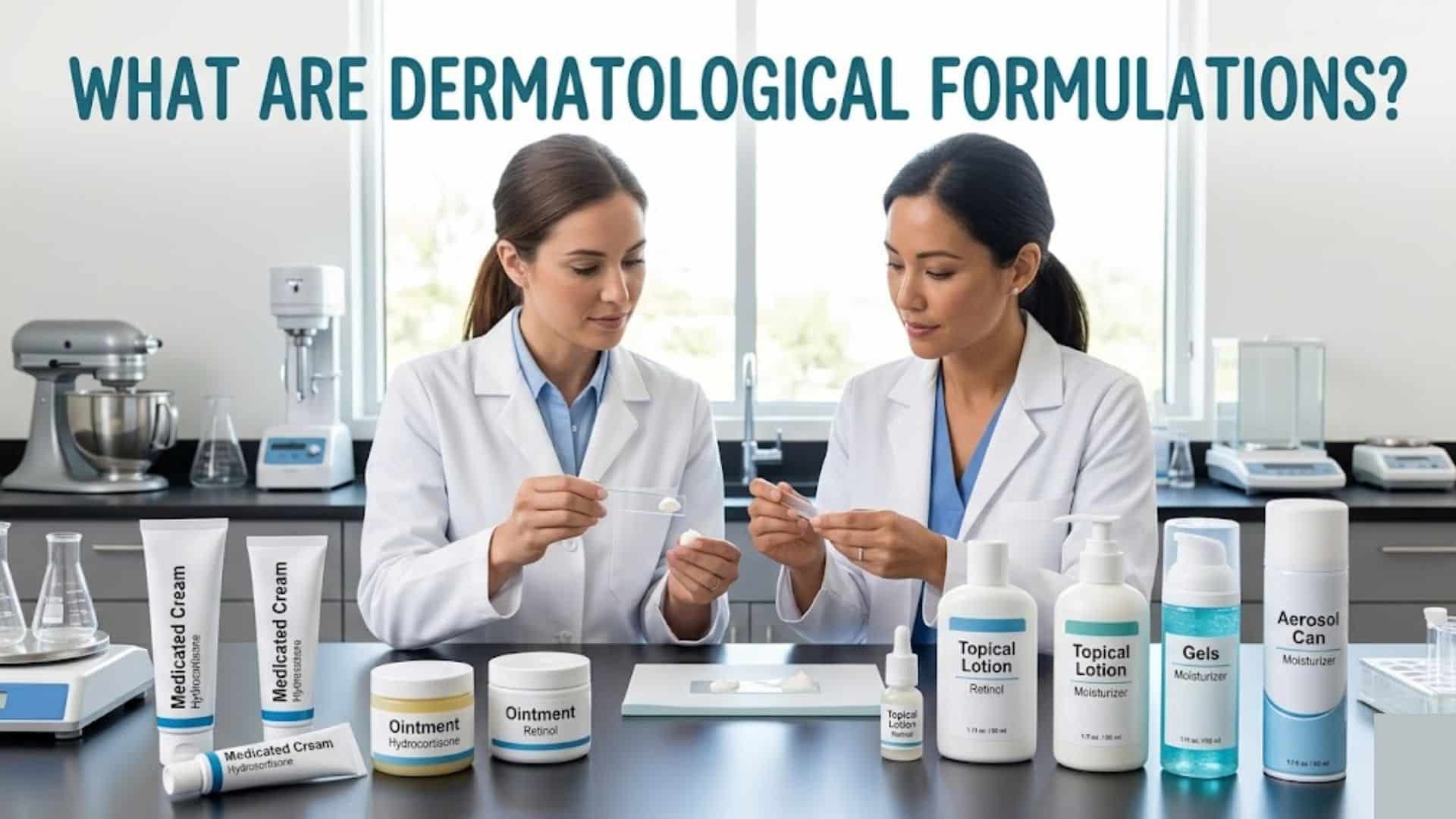
Dermatological formulations refer to topical pharmaceuticals with active ingredients designed in a manner in which their effectiveness on the skin is controlled by the vehicle/base formulation. The roles of the dermatological preparations include:
- Effective administration of active agents to the targeted area.
- Lubrication or protective role.
- Anti-inflammatory and/or anti-irritants role.
- User-friendliness.
Based on the consistency of the preparation (viscous, semi-solid, and liquid), type of vehicle used (oil in water or water in oil emulsions) as well as the purpose (lubrication, anti-inflammatory, and anti-microbial, etc.) the dermatological formulations are classified into categories.
Creams – Hydrating and Rich
A cream is a thick semi-solid emulsion formed when water and oil combine. It is less oily than an ointment but more oily than lotion.
How They Work
When one applies cream on his or her skin, a film forms which serves as a protective cover to enable locking in of moisture while providing a gradual release of the medication. Hence, creams provide great hydration and protect the skin, making them appropriate for people with skin irritation or skin dryness. Creams are useful in treating such conditions as eczema, dermatitis, and fungal infections and are also used after certain skin procedures.
Pros
- Very hydrating and provides good protection to the skin.
- Suitable for all skin types.
- Long release time because of prolonged contact.
Cons
- Tend to be greasy and heavy.
- Can clog up the pores when used by individuals with acne-prone skin.
Remember creams are highly beneficial, but only for those with dry or irritated skin.
Gels – Lightweight and Fast-Drying
Gels are alcohol or water-based and are light in weight and fast-drying and do not contain the characteristics of creams which are thick and dense.
How do Gels Work?
Gels are less occlusive than other types of topical medicines and they work by applying fast-drying to certain parts of the skin surface almost immediately without leaving any residue on the surface of the skin.
Advantages
- Fast-drying and non-greasy.
- Suitable for oily/acne skin.
- Have a cooling sensation once applied to the skin.
Disadvantages
- Gels cause dry skin because of their alcohol content.
- Cannot be used on very dry skins.
Dermatological applications of gels involve treatments for acne, irritated skin, inflammation, etc.
Lotions – Well Balanced and Ideal for Daily Use
Lotions are light emulsions with a higher amount of water compared to creams. Since they have a faster absorption rate for large parts of the body, lotions are ideal for daily use as moisturizers.
How Does It Work?
Lotions work by moisturizing the skin without making it heavy. Lotions are less occlusive than creams. They only provide medium hydration. This is what makes them suitable for managing mild dry skin conditions.
Advantages
- Reapply less often than creams since the lotion is quickly absorbed into the skin.
- Can moisturize bigger body areas such as arms and legs.
Disadvantages
- Have to be reapplied frequently because they evaporate easily.
- Not as hydrating as creams for severe dry skin conditions.
Lotions may be applied regularly or in conditions such as mild eczema.
Comparing the Properties of Creams, Gels, and Lotions
| Property | Creams | Gels | Lotions |
|---|---|---|---|
| Texture | Very thick | Very thin | Thin |
| Rate of Absorption | Moderate | Very fast | Moderate-to-very fast |
| For Use On | Dry skin or inflammation | Oily skin or acne skin | Any kind of skin |
| Moisturization | Very moisturizing | Very dry to moderate | Moderate |
| Sensations on the skin | Rich | Feels cool and not greasy | Light |
Suggestions:
- Creams may be ideal for people who have dry skin.
- Gels will suit those who have oily or acne skin.
Factors Affecting Formulation Effectiveness

Some of the factors that affect the effectiveness of the formulation include:
- Solubility: The solubility of certain substances in water or oil means they can be used in certain bases.
- Penetration Aids: Some formulations have substances that help the active ingredient penetrate deeply into the skin.
- Skin Condition: A damaged or sensitive skin would need a certain kind of formulation.
- Personal Preference: It is necessary to consider the patient’s preferences when it comes to using the product.
Choosing the right formulation means balancing effectiveness and convenience.
Suggestions for Choosing the Right Formulation
- Establish the kind of skin, dry, oily, combination, or sensitive.
- Identify the function of the formulation, be it hydrating, treating acne, anti-inflammatory effect, or restoring the skin barrier.
- For sensitive skin, select formulations that are free from fragrance.
- Consult your dermatologist or pharmacist if in doubt, especially regarding prescription drugs.
Conclusion
Each type of product has certain benefits and drawbacks. Creams possess excellent moisturizing qualities and the ability to provide a long-lasting effect, whereas gels allow quick absorption and do not form a greasy layer on the skin surface. Lotions are more easily applied and have satisfactory moisturizing capabilities.
It is necessary to choose the most suitable product here at Hacks and Slack Healthcare we provide according to individual needs, skin type, and health state. Knowledge of the functioning principles of the medications can help make more informed decisions regarding treatment.
FAQs about How Dermatology Formulation Work: Creams vs Gels vs Lotions
What are the differences between creams, gels, and lotions?
Creams are thick and moisturizing, while gels are light and quickly absorbed, and lotions are thin and suitable for application over a broad surface area.
What kind of formulation is suitable for dry skin?
Creams are suitable for dry skin because they help hydrate skin, restore its protective barrier, and maintain hydration for more extended periods.
Can I use gels on my acne-prone skin?
Since gels are non-greasy, light, and quickly absorbed, it would be ideal to use them on acne-prone skin.
How often can I apply lotions?
Considering that lotions are light and absorbed easily, it would make sense to apply them multiple times per day.
Is it okay to switch formulations?
Yes it’s absolutely fine, but only provided you consider your skin type and properties.